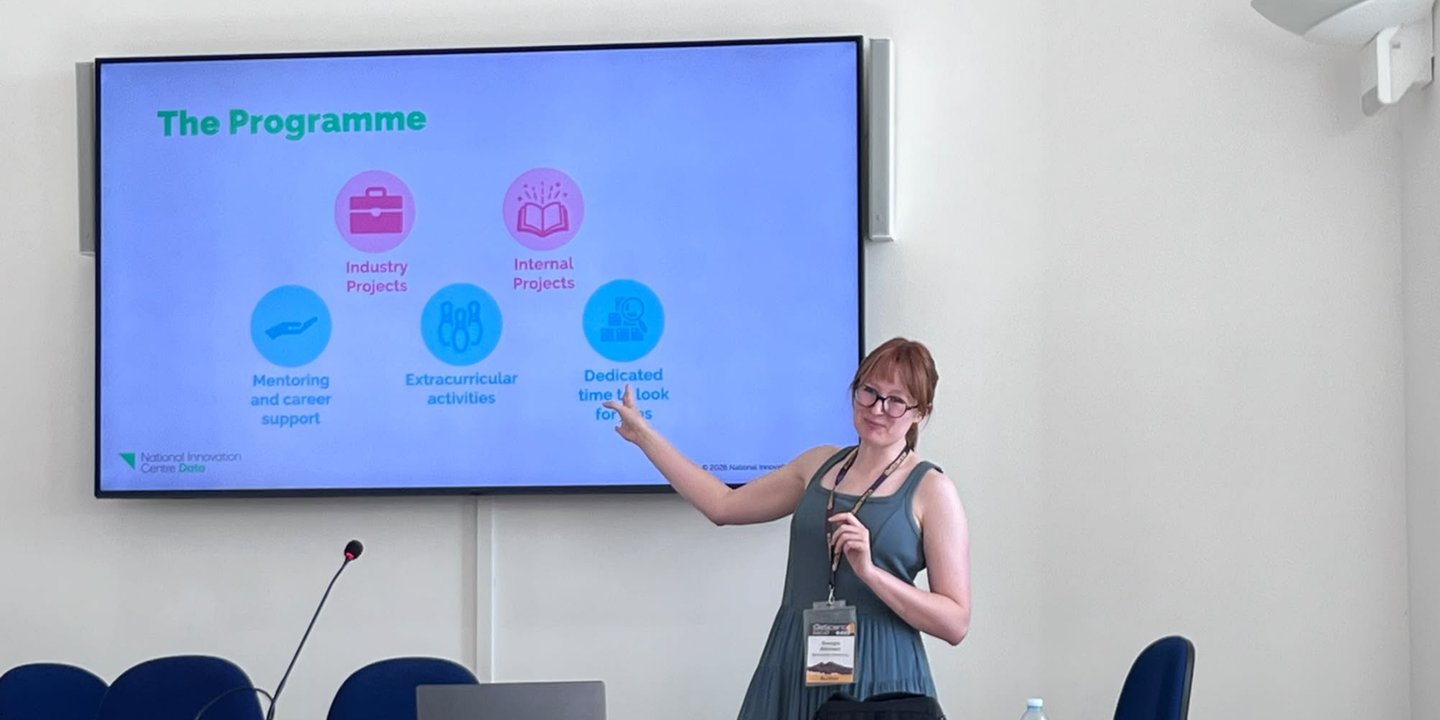
After returning from eScience 2026, I've been reflecting on the AI Capability Uplift workshop that I co-organised with Carlos Muñoz Novo from The Way Over. Throughout the session, we heard perspectives from across Europe and the United States on how organisations are building AI capability, how AI is being incorporated into teaching and learning, and how emerging approaches such as agentic AI can be adopted safely in research and operational settings.
Throughout the morning, we heard examples of AI capability uplift across a range of contexts, including workforce development, research software engineering, biomedical AI research, AI-supported learning, and AI governance. Although the domains were very different, a common theme emerged across the discussions. Successful AI adoption is rarely determined by access to technology alone. Instead, participants repeatedly emphasised the importance of human judgement, practical experience, organisational culture, trustworthy processes, and the conditions that enable people to learn, experiment, and use AI responsibly.
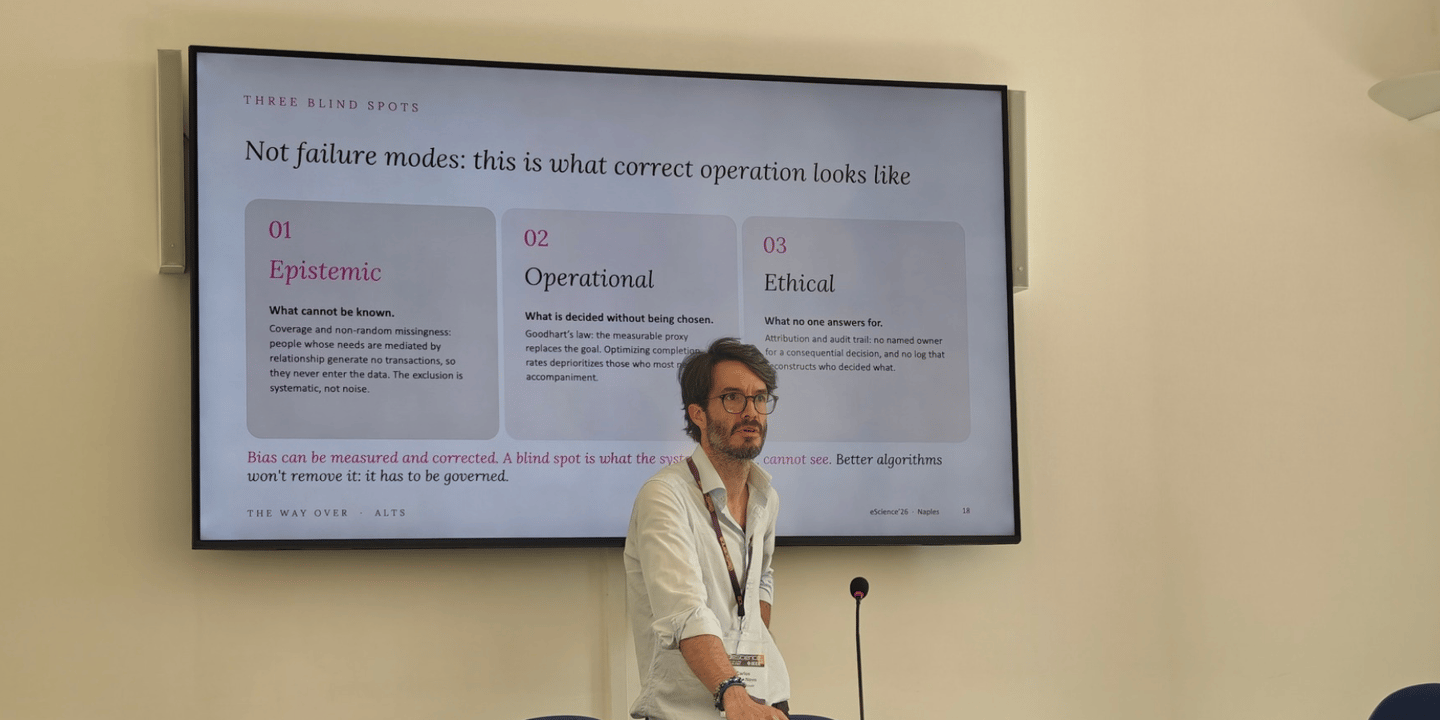
Image of Carlos Muñoz Novo presenting at the eScience AI CAPWORK workshop.
The workshop concluded with a collaborative activity to identify the key enablers and barriers to AI capability uplift. Drawing on the Thinking Environment, participants first reflected individually on a question, then discussed their ideas in pairs. The pairs then joined to form groups of four, where they shared perspectives and agreed on their three most important enablers and barriers. Finally, the themes from each group were brought together, and participants voted on the ideas they considered most significant.
What I found particularly interesting was how quickly the discussion moved beyond technology. Although AI tools and models are often at the centre of conversations about adoption, participants consistently highlighted people-focused factors as being the most important enablers of success. Themes such as trust, leadership, psychological safety, opportunities for experimentation, and creating space for learning appeared repeatedly across groups.
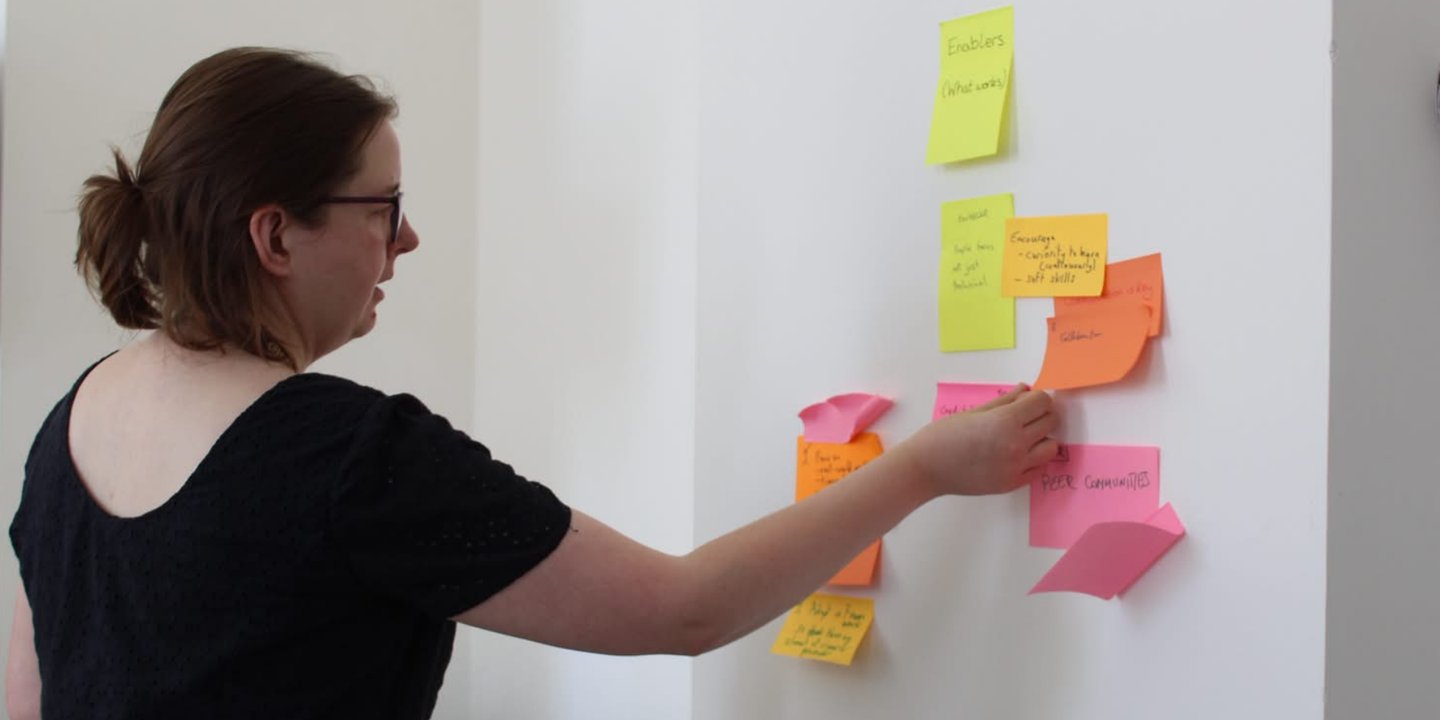
Image of a workshop attendee adding post-it notes to the wall as part of the workshop activities.
The strongest message to emerge from the exercise was that successful AI capability uplift must be people-first rather than tool-first. Technology may create opportunities, but organisations ultimately succeed or fail based on whether their people understand, trust, and are supported to use it effectively.
On the barriers side, the issue that resonated most strongly with participants was the pace of change. AI is evolving so rapidly that organisations can struggle to keep up. Processes, governance arrangements, training programmes, and even organisational narratives can quickly become outdated. For many participants, the challenge was not necessarily resistance to AI itself, but maintaining confidence and clarity in an environment where expectations, capabilities, and best practice continue to shift.
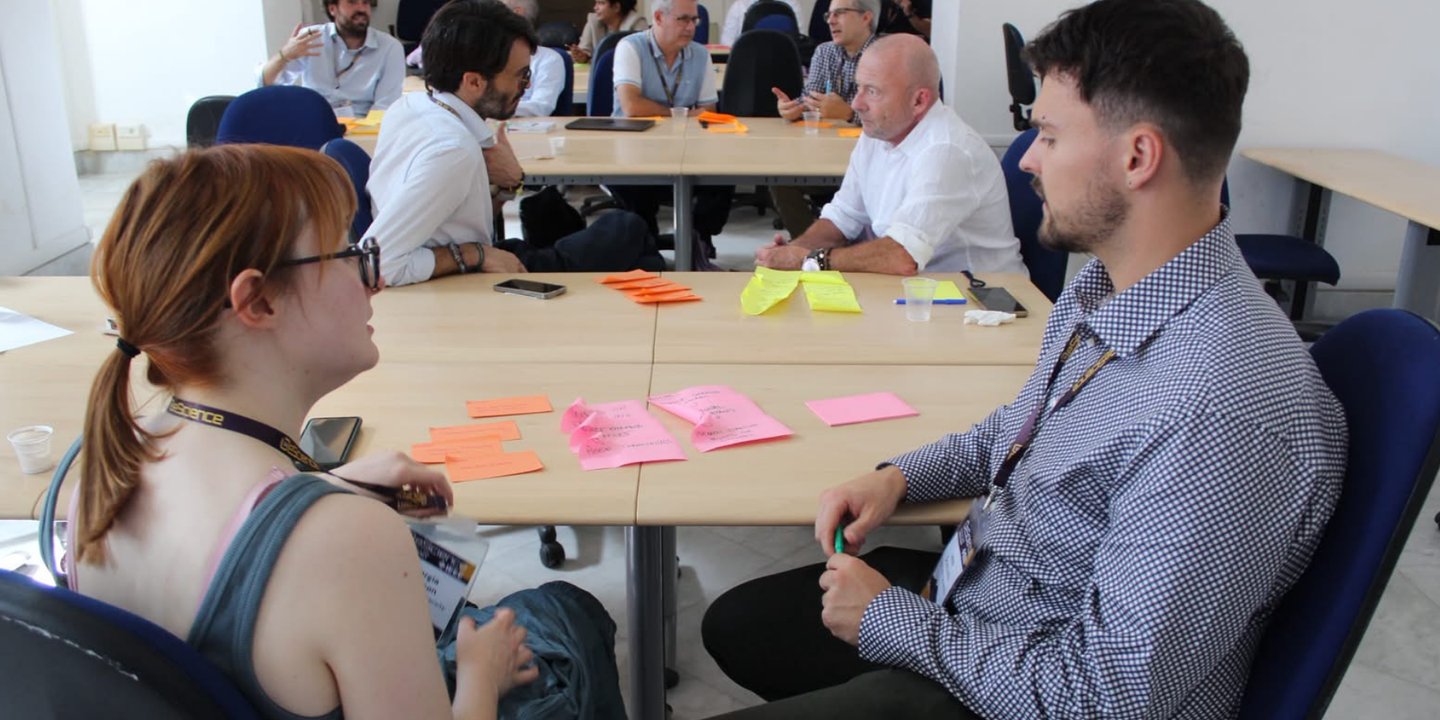
Image of Dr Georgia Atkinson discussing individual perspectives with a workshop attendee.
For me, this captured one of the workshop's central themes. The question is no longer whether organisations should develop AI capability, but how they can do so in a way that is sustainable, meaningful, and centred on the people who will ultimately use these technologies. While the organisations represented in the room differed significantly, the discussion suggested that many of the underlying challenges, and many of the solutions, are shared.
You can read more of our news stories and sign up to our newsletter to keep up to date with our latest news, events and developments.